
Hey, Happy and Healthy Altitudes to you.
So, just the other day, uh, a new food guide pyramid was released and I’ve been just reading a little bit about it because I was teaching a class and somebody brought it up. I didn’t even know that it was released because it kind of just trickled out. And, uh, the comments were, “Oh, it’s terrible. Um, I can’t believe red meat is at the top.” And it piqued my curiosity because I didn’t even know what the pyramid looked like and I didn’t even know we brought the pyramid back. I thought back in 2013 or so uh it got um removed and changed for my plate. So it was news to me that there’s a new pyramid. And so I did a little research and briefly and looked at it and I thought in real time why don’t we take a quick look at what that new pyramid looks like? And I thought we could jump on the Google and look at the new food guide pyramid and see what it says. Am I spelling it right? Pyramid. Let’s look it up and let’s see what it says. So, um, first of all, there’s a lot of information they’re giving. Um, it looks like RFK and Rollins the credit for making this. Um, if we recall, Michelle Obama made a new thing called My Plate during the Barack Obama administration. I don’t remember what the uh research was on that. I’d have to go back and look at it. But let’s just take a quick look and see. This is the USDA website where I think it should probably hopefully be visualized as a document. But it does tell us a few things where the guidelines emphasize simple flexible guidelines rooted in modern nutrition science. I love that word science and I love nutrition because we all need it. So it says prioritize protein at every meal. Wouldn’t disagree with that. Consume full fat dairy. I’m lactose intolerant so that might not apply to me. Um, but no added sugars is definitely a good thing to think about. Eating vegetables and fruit throughout the day, focusing on whole forms, whole foods. Um, you know, real vegetables, real fruit instead of taking a pill or drinking it, I think is what they’re getting at. Incorporate healthy fats from whole foods such as meats, seafood, eggs, nuts, seeds, olives, and avocados. I think that’s pretty cool. um those are all good uh good fats rather than um unhealthy saturated fats. Focus on whole grains while sharply reducing refined carbohydrates like candy and sugar. Refined sugars, added sugars, which you’ll see on the labels. Limit highly processed foods. Added sugars and artificial additives. There it is. Added sugars. Remove reduce those. Um eat the right amount for you based on your age, sex, size, and what? Activity level. So, activity level is going to be a big part of that. Um, and what I noticed on the food guide pyramid is that it’s missing that. And I’ll explain in just a second if we see a image of it. Um, and then it says, uh, choose water and unsweetened beverages to support hydration and limit alcohol consumption for better overall health. Not telling us how much to have or how little to have, but that’s helpful. The other thing that’s cool here, I thought about how they uh wrote it out, was that um 90% of healthcare spending goes toward treating chronic disease. That’s probably pretty true. That’s interesting. I’m not going to click on Well, let’s click on the link. Let’s see what it says. Um uh well, we’ll go back to that. Anyway, this is all on the USDA website. If you want to dive further into the science and data, you could look at that. I’ll take some time later to do that myself. More than 70% of American adults are overweight or obese and nearly one in three adolescents has pre-diabetes. My master’s degree was working with overweight kids. And yes, it is problematic and a lot of times that actually comes down to lifestyle and parental choices, not just uh children’s choices. Sadly, um it might even be a form of child abuse when parents are overfeeding their kids to just make them happy. And then diet-driven chronic disease now qualifies many young Americans um or disqualifies I’m sorry young Americans from military service threatening national readiness and uh limiting opportunity. That actually uh that could be true. There are weight limits on some rides at amusement parks and things like that. So that might limit opportunities. Um it might make it harder to sit in a seat on an airplane. But so uh I don’t see the uh I don’t see it here. I don’t see the image. But I wish they had it there. It would make it a lot easier. Um, but uh let’s see if it’s on here. If I go to the dietary guidelines. Oh, look.
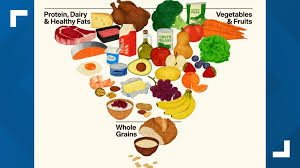
There’s broccoli and whole milk and and meat. And here it says view the guidelines. Um, so there’s the announcement. Um, but I still haven’t seen the pyramid. I wish they would make it easier to find the pyramid. Here it is. There’s the pyramid. Boom. Right there. So, um, what I noticed on this pyramid is that and and from what I gathered, from what people were saying, they were looking at the pictures, not just reading, um, what the things are that the recommendations are. Um, lean proteins are always going to be better. So, I like that that’s at the top because we should be eating more lean salmon, more lean chicken, more lean beef, um, lean even lean cheeses or eggs. Um, Greek yogurt is on there. That’s pretty cool. Um, I see a little bit of uh is that fish or is that a croissant? I can’t tell. I see tuna. I see maybe a croissant or shrimp. Um, but lean fish, that’s great. Avocados, good oils. Olive oils. I’m Italian. I always think we should have some extra olive oil. And if you look at the Mediterranean diet, they have that. Um, but load up on those veggies, that’s great. Um, natural fruits rather than just drinking fruit juices because the natural fruit is going to have more fiber in it. So, I think that’s cool that that’s higher up on that pyramid. And I do think um seeing the grains down at the bottom isn’t a bad thing because I do think we over consume carbohydrates. Um I would love to see if they had more like I don’t really see quinoa on there. I can’t really tell. I see peanuts and nuts there in the middle. I see grapes. I see uh maybe that’s cottage cheese with something on top. I’m not sure um what these things are over here. um that are like it looks like uh I’m not sure what these are over here, >> but um whatever those are, they look pretty good. Um and uh I think that overall, you know, reducing grains, having more protein, more fat, um that’s good fat, and um vegetables, all that stuff does make a lot of sense to me. Um, I’m going to go in and I’m going to try to uh try to do some of the research on this. But um, it is interesting because right here on the website it talks about the scientific foundation um, and the appendices. So, you know, that seems like it’s pretty easy to click on and and figure out what they’re looking at here, what helped them create these guidelines. Um, and you know, without diving too far into this, I would be curious to see if it’s all peer-reviewed, and that’s typical evidence-based, current evidence-based, and its limits. Um, it looks like there might be some citations that we could even dive further into to see what that research shows. Um, I think that there’s some some really cool information here. I’m going to dive into it and geek out a little bit more later. I won’t do that in this video, but I encourage you to as well. I see some things here with uh artificial sweeteners. I see generally regarded as safe, revoked. Um partially hydrogenated vegetable oils, trans fatty acids. Um and so that’s revoked. Um which is interesting. Broinated vegetable oil, that’s that’s also something that’s not natural. So, chemical additives and food packaging contaminants is the title of that chart. So, this is interesting because if you see these on your labels, you want to probably avoid those. Um and so uh so some of these things you’ll see um might or might not be um as helpful but um the generally the graz over here on the right you’ll see this uh this like whatever they whatever they label it here gr status that’s generally regarded as safe. So it tells you it’s revoked. Um some were affirmed some were grandfathered. So that’s interesting. Um, I think that’s kind of cool that they have this in the appendices. Um, because I think that those are all things um that us as humans should look at when we’re putting stuff in our body. Like food dyes here, cherries, um, cocktail marishino cherries, those are always good. Baked goods, those are were affirmed in 1969. Um, so really old old standards there, you know. Um, so maybe it is good that we are looking at do we need those colors in cherries? Do we need it to be that bright red? I don’t know. Do we need it to be that bright blue like in M&M’s? I don’t know. Beverages and confections and frostings and ice pops. That was from 1982. So those are some pretty old guidelines as well. Um, looking at some of the new science. You’ll see here um some of the different things that they um are basing this off of. You know, um you’ll see things here like uh most of the evidence linking exposures of these chemicals to adverse health outcomes including cardioabolic disorders, cancer, dementia. Um it’s based on observational studies. Um short-term clinical trials provide additional evidence. Um, so chemical additives are not good for us. So anyway, I’m not going to spend a lot more time on this video, but I will say, um, it is very interesting to, uh, let’s go back to look at how they put this together. They have things pretty accessible here. Um, and the biggest thing is, you know, um, eat real food. And um I think the biggest thing here that that I would take away is that um you know when you when you look at what all of this is, I think the most important thing for us to think about is that we all are humans. We all have the freedom in America to choose what we want to eat. This pyramid is just a guideline. It doesn’t mean you have to eat this way. As a lactose per intolerant person, I probably wouldn’t eat this way. Um, but as an athlete, I probably do eat this way a little bit more. Um, and so I think that that’s something that, uh, you know, that we all should probably take a little time to think about, do a little research on, um, investigate just a little bit more and see if, you know, the foods that you eat suit your lifestyle. I think that’s the most important thing. And remember that it’s not um, a mandate per se. It is more of a guideline. What they do with these guidelines is they use them for, you know, food programs. They use these on um military bases for um for for food distribution. They use this sometimes in schools and things like that. But there are some freedoms there that people can also use to to talk about and discuss. And this is just a guideline and a template. What I would really love though is if they had on it, working up that pyramid, if they had physical activity, um, and that’s the last thing that I would think about is as you um, rebalance what you’re eating, also think about rebalancing physical activity. And I really wish they put that on there. They talked about um individual physical activity levels and height and weight and age and activity level, but how much activity do you do can predict also what your um what your weight loss could be, what your weight gain could be, what your weight maintenance could be. And so I really strongly encourage you to think about are you getting that 150 minutes of physical activity of moderate to vigorous physical activity a week? And moderate to vigorous is a whole different conversation. Uh we can look at that on another video. Um but do consider is your physical activity going up that pyramid, that inverted pyramid. Are you going up with your physical activity like you’re doing with your lean meats, your good oils, your good fats, and your vegetables and fruit consumption? That’s the question I have for you. Feel free to comment. Feel free to shoot me an email. Um, but I hope that this helps you think about being active, but most importantly eating well for your life. And I hope that it will help you realize that there’s a balance between all of this with guidelines, with your personal preferences, and with the choices you make.